Your Basket is Empty
If you've recently had a timber fence installed or purchased new wooden fence posts, you may have noticed long vertical cracks developing in the timber. While this can initially look concerning, the good news is that in most cases, splitting in timber posts is completely normal and is not a sign of poor quality or a faulty product.
The photograph below shows typical timber checking in a 100mm x 100mm HC4 pressure-treated post. These natural surface checks are completely normal and do not affect the strength or service life of the timber.
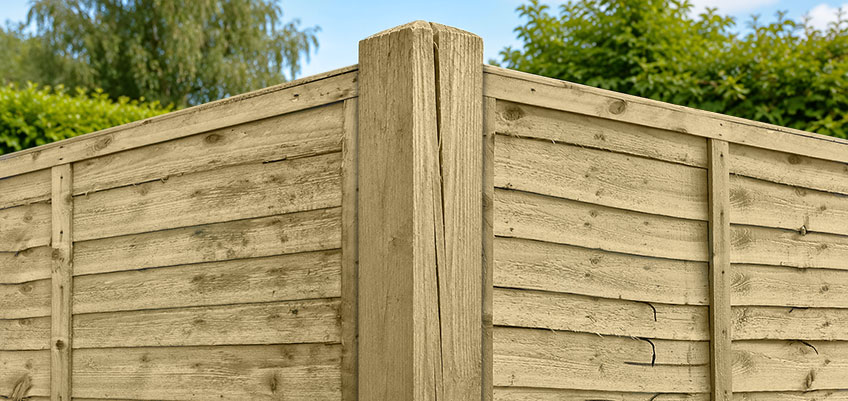
These natural cracks are known as checks or checking and occur in virtually all types of structural timber, including pressure-treated softwood posts, oak, and other hardwoods.
Wood is a natural, hygroscopic material, meaning it continually absorbs and releases moisture depending on the surrounding weather conditions.
When a timber post is exposed to warm sunshine, wind or dry weather, the outer layers dry much faster than the centre of the post. As the outside shrinks while the inside remains relatively unchanged, internal stresses develop, causing the timber to crack along its natural grain.
This process is known as checking and is entirely normal.
Larger posts, such as 150mm x 150mm or oak gate posts, often develop more noticeable checks than smaller fence posts simply because there is a greater difference in moisture content between the centre and the outer surface during timber drying.
Not necessarily.
As humidity increases during autumn and winter, timber naturally absorbs moisture and expands. Many checks will partially close during wetter periods before opening again during warmer, drier weather.
This seasonal movement continues throughout the life of the timber. While some checks may become less noticeable, they rarely disappear completely.
In the vast majority of cases, no.
A typical surface check follows the grain of the timber and does not significantly reduce the structural strength of the post.
A fence post remains perfectly serviceable provided that:
Surface checking is regarded throughout the timber industry as a natural characteristic rather than a manufacturing defect.
The following are generally considered perfectly acceptable:
These are cosmetic characteristics of natural timber and should not normally affect performance.
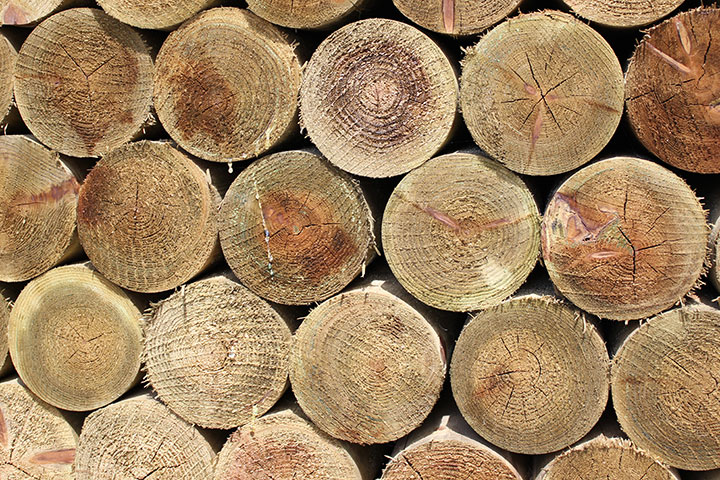
75mm Machine Round Rails with slight end grain radial checks
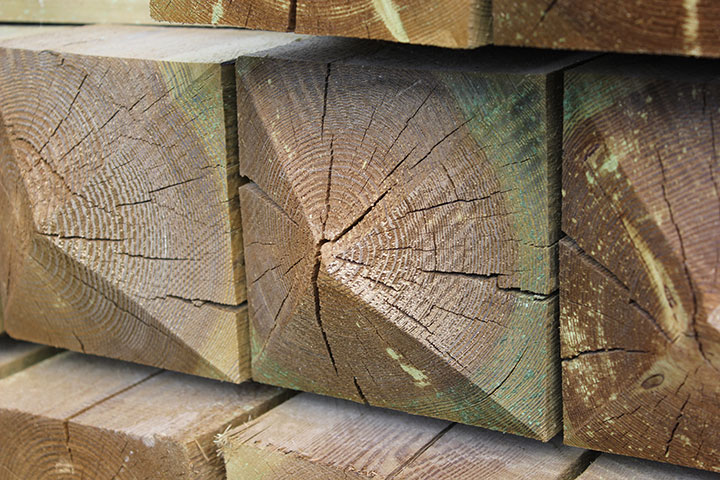
150 x 150mm posts with larger end grain radial checks
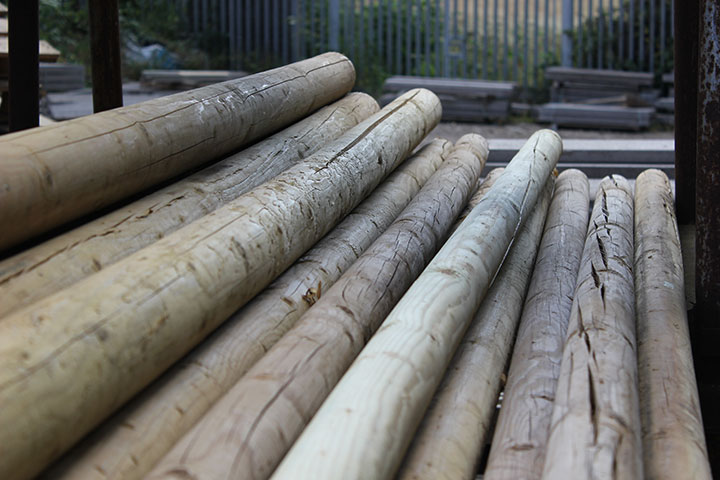
100mm Machine Round Rails with vertical checks
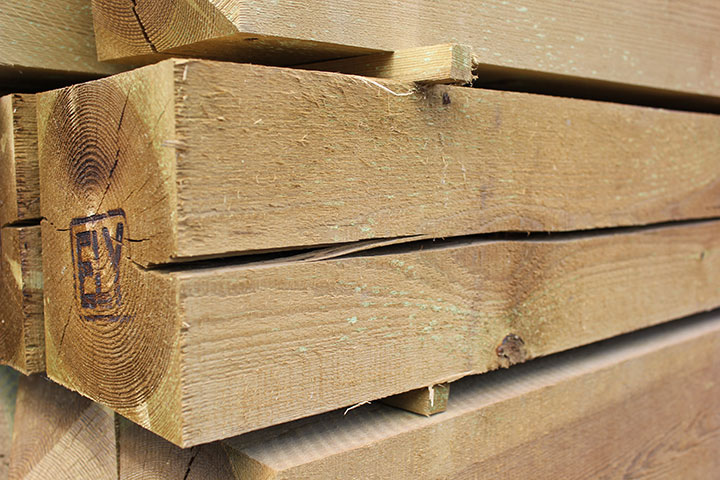
200 x 200mm posts with large vertical checks
You should inspect the post if you notice any of the following:
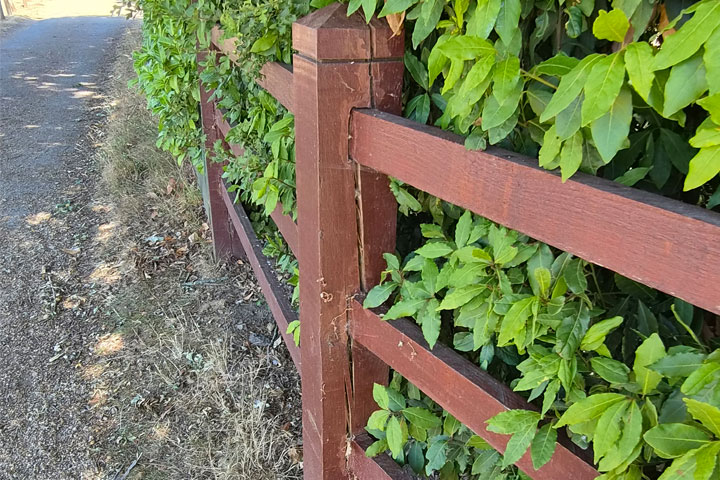
Early signs with splits appearing on joints, the rails will become loose
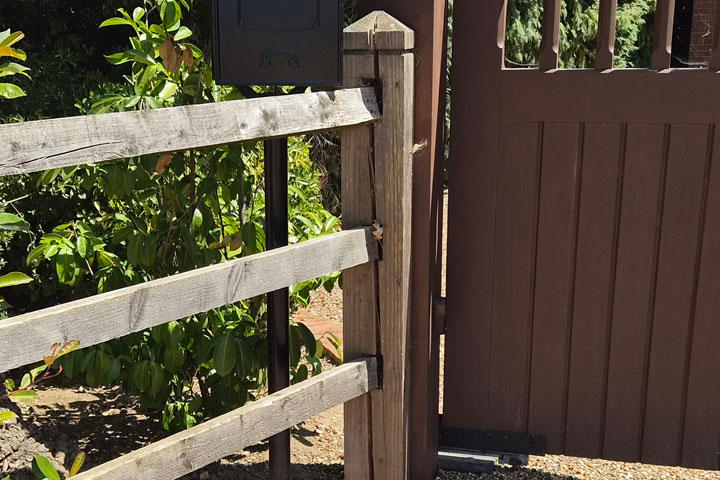
Continuous split increasing and rails loose enough to remove with ease
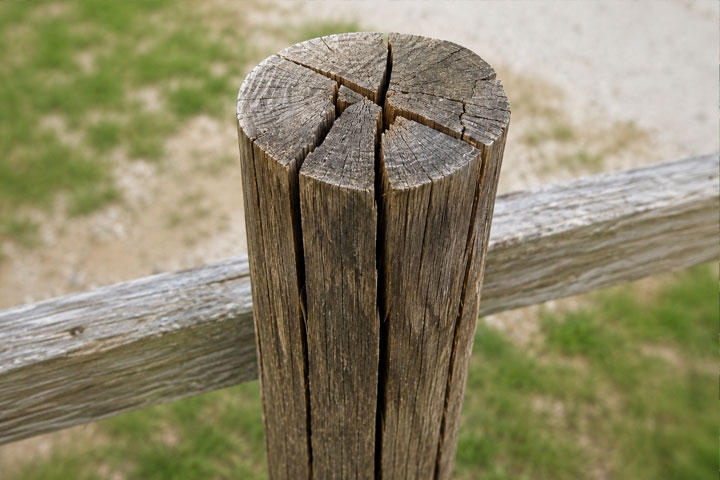
Post splits that go through the core from one side to the other
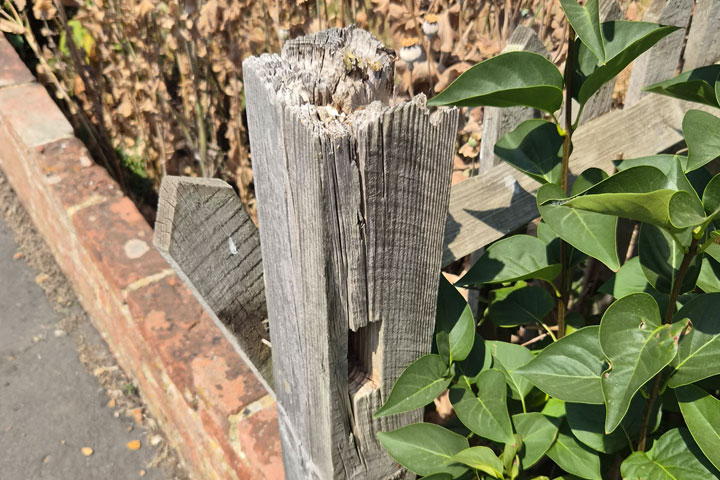
Rotten post, soft to the touch and crumbly
Every piece of timber is unique. Several factors influence how much checking occurs:
For example, a south-facing fence that receives full sun throughout the day will often develop more noticeable checks than one located in permanent shade.
Similarly, large oak gate posts naturally develop wider surface checks than smaller softwood pressure-treated fence posts.
No timber can be completely prevented from checking, but good maintenance can reduce the severity of seasonal movement.
We recommend:
It is generally not recommended to fill natural checks with wood filler or rigid resin products. Because timber continues to expand and contract throughout the year, many fillers eventually crack, separate from the timber or trap moisture.
Natural checking is generally recognised throughout the timber industry as an inherent characteristic of wood rather than a manufacturing defect.
For this reason, surface checks that do not affect the structural performance of the product are not normally considered a warranty issue.
If a post becomes structurally unsound due to manufacturing defects, decay or treatment failure, this should be assessed separately from normal seasonal checking.
Is it normal for fence posts to crack?
Do oak fence posts split?
Should I replace a split fence post?
Will the cracks disappear?
Why are my new fence posts splitting already?
Can I fill cracks in my fence post?
If you've noticed vertical splits appearing in your wooden fence posts, there's usually no cause for concern; this is just timber movement. Surface checking is a natural characteristic of timber as it responds to changing weather conditions and moisture levels.
In most cases, these checks are purely cosmetic and have little or no effect on the strength, durability or lifespan of the post. The timber will continue to expand and contract with the seasons, and the appearance of the checks will naturally change over time.
Only when a split causes structural instability, excessive movement, or is accompanied by signs of decay should repair or replacement be considered.
At Challenge Fencing, we're always happy to advise if you're unsure whether a timber post is exhibiting normal checking or whether it requires further inspection.
Did you know?